Check us out at www.bridgingculture.com
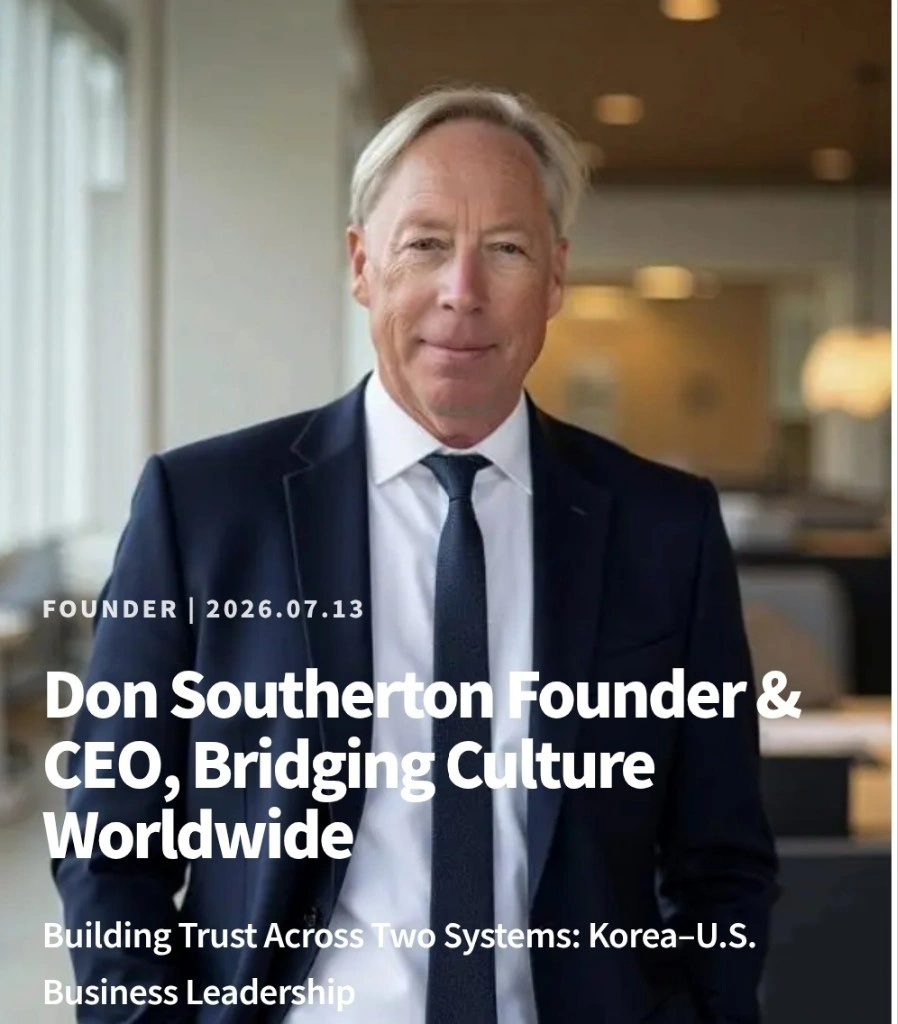
I discuss the leadership required for sustainable global expansion.
https://coreaxislab.com/posts/don-southerton-founder-ceo-bridging-culture-worldwide
Question? Call Don at 310-866-3777
KOREA-US-Global INTELLIGENCE BRIEFING
Monday, August 3, 2026
HEADLINE
Korea posts a record chip-driven July export month
TOP STORY
Korea’s July exports came in at $98.9 billion, with semiconductor shipments topping $40 billion for a second straight month.
Meanwhile, the won has weakened to the dollar. For US buyers of Korean components, this currency move partly offsets tariff costs.
SECTOR WATCH
Semiconductors: Samsung and SK Hynix are moving toward large long-term supply agreements with major US technology buyers, which will lock in AI memory volume ahead of the tariff step. The unresolved exposure is China, where Korean firms’ ability to run their existing fabs still depends on US license posture.
Automotive: Hyundai, Kia and Genesis vehicles built in Alabama and Georgia sit outside the import tariff entirely, which keeps widening the margin gap between their US-built and Korea-built lines.
BCW TAKE
Clients with Korea exposure should treat the won as a temporary cushion, not a trend.
Question? Call Don 310-866-3777
TOP STORY
Samsung Electronics closed up roughly 27 percent and SK Hynix roughly 30 percent on Friday in Korea, the largest single-day gains on record for both, after strong Microsoft, Amazon and Meta results reaffirmed AI infrastructure spending.
BCW TAKE
What can I say, semiconductors dominate: Samsung unveiled its next-generation HBM4; SK Hynix closed long-term supply agreements with more than 10 customers, and Nvidia is among them.
We’re watching the sector, the supply chain and the opportunities.
Call Don, with any questions 310-866-3777
US-Korea-Global Week in Review–New Book, too.
The week of July 20 to 24 ended with the tariff question answered, and not the way Seoul and others wanted. Washington set a new floor, Korea, for example, kept its previous ceiling.
Forced-labor tariff landed at 12.5 percent. USTR issued its final Section 301 action Thursday covering Korea, Japan, Switzerland and 57 other economies, effective July 24.
For Korea it works as a floor, topping products up to 12.5 percent rather than adding 12.5 across the board. Seoul has held the 15 percent ceiling on cars. Washington reaffirmed that Korean goods should not exceed the negotiated bilateral rate. Section 232 metals stay capped at 15 percent through 2027. Pharma and semiconductor carve-outs are still being negotiated.
BCW Take
Globally, the 12.5 percent forced-labor floor is the number to plan around now. It is not catastrophic, but it resets the base under every other trade conversation, and clients with EU, China, or Vietnam-adjacent supply chains sit in the same bucket.
The bigger story is the trade: Korea has bought its 15 percent ceiling with capital planted on American soil. Shipbuilding, energy, and chips are the currency.
Cadence: Briefing Mon-Fri, Sunday Week in Review, plus special updates most Saturdays.
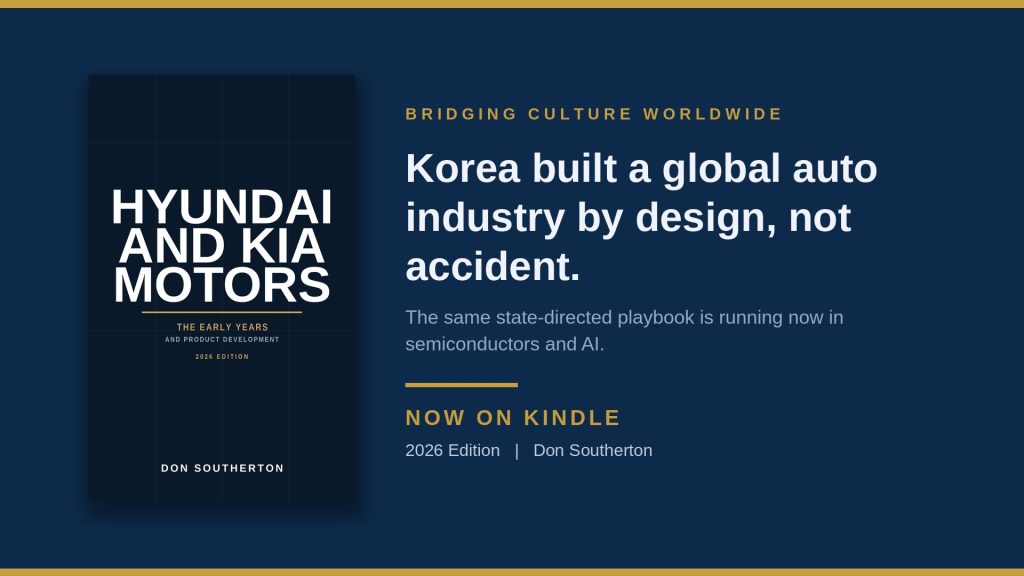
New on Kindle: Hyundai and Kia Motors, 2026 Edition
I have revised and reissued my 2012 history of how South Korea built a global automotive industry. It runs from Hyundai’s first Ford assembly agreement in 1967 through the Pony and the Excel, Kia’s rise from three-wheel trucks to the Festiva and Sephia, the IMF Crisis, and the merger and quality turnaround that followed.
The 2026 edition adds an afterword on why this matters now. The state-directed export playbook that built the car industry is the same one running today in semiconductors and AI.

Cadence: Briefing Mon-Fri, Sunday Week in Review, plus special updates most Saturdays.
I am in the process of updating after nearly 15 years. The book examines the origin of not only Hyundai and Kia, but Korean industry. Look for future updates on its release in Kindle and paperback.
From 2012,
Author Don Southerton Announces Hyundai and Kia Motors: The Early Years and Product Development
Author Don Southerton has announced the release of a new publication Hyundai and Kia Motors: The Early Years and Product Development. The Book provides deep insights into the rise of the South Korean car industry.
Southerton’s latest writing weaves first-hand accounts of the challenges experienced by Korean management during the first years of Korean car production with the development of specific models, such as Kia’s Brisa, Pride, Sephia, Sportage and Rio plus Hyundai’s Pony, Excel, and Santa Fe
Southerton notes, “Today we are witnessing a remarkable transformation in Hyundai and Kia brand image and sales are at record pace. This accomplishment was decades in the making. Hyundai and Kia Motors: The Early Years and Product Development shares the story behind this success.”

Monday, July 20, 2026
Briefing Mon-Fri, Sunday Week in Review, plus special updates most Saturdays.
TOP STORY
Samsung Electronics and SK Hynix shares tumbled in pre-market trading Monday (Samsung down over 5%, SK Hynix down 7.6%), even as both companies press ahead with a combined 800 trillion won ($518B) domestic fab buildout in southwestern Korea.
The sell-off lands days after SK Hynix’s record $26.5B Nasdaq listing, the largest-ever US debut by a foreign company.
TRADE & TARIFF
Section 232 metals tariffs on Korean goods remain capped at 15% through 2027.
SECTOR WATCH
SK Hynix’s Nasdaq debut and the Samsung/SK Hynix 800 trillion won ($518B) national semiconductor and AI mega-project still dominate the week.
Samsung Electro-Mechanics also formed a 480 billion won JV with a Sumitomo Chemical unit for glass-core chip substrates.
Hanwha Qcells and Hanwha Systems signed a deal to co-develop tandem solar cells for satellites, with Systems investing 30 billion won ($20M) through 2028 ahead of fitting the cells to a planned 64-satellite SAR fleet from 2029.
Hanwha Systems separately signed a defense semiconductor development contract with Seoul National University and Sungkyunkwan University covering radar, seeker, and satellite comms chips.
Korean biotechs LigaChem Bio, ABL Bio, and Genome & Company are racing on next-generation antibody-drug conjugates as global pharma pours capital into cancer therapy deals.
BCW TAKE
The chip story is now a two-track bet: Seoul is putting half a trillion dollars behind fabs at home while Washington keeps pushing the same companies to build in the US.
Clients with Korea chip exposure should plan for both tracks to keep advancing in parallel, not for one to win outright.
The Hyundai Way is now available in Kindle, paperback, and hardcover.
Inside the culture, leadership, and strategy that built a global automaker, the work-funneling model, the chaebol timeline, and the five transformation vectors reshaping Hyundai’s next decade.

Order on Amazon: https://www.amazon.com/dp/B0GRPDFVNF
If your team is weighing Korea exposure this year, this is the lens I bring to client work. Reply if you’d like to talk. 310-866-3777
AI Governance — Ander IPX as the front-runner in enterprise AI governance infrastructure, positioned as “the AWS of enterprise AI” per founder Ken Herfurth.
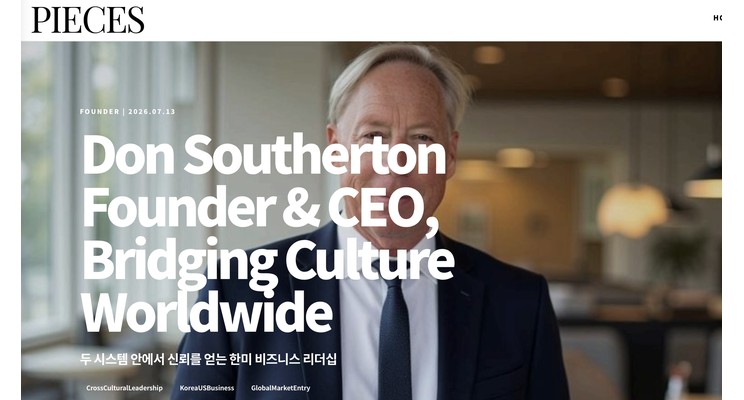
PIECES Magazine interview — Don’s Q&A on cross-cultural, cross-border leadership ran across the week: his take in global business is being trusted inside both systems (HQ and local) at once.
Gunsens — BCW is leading introductions for Gunsens, a Silicon Valley privacy-first AI gun-threat detection platform (sub-second detection).
Check out www.bridgingculture.com
Friday, July 17, 2026 — Korea-US Briefing
TOP STORY: AI Governance — Ander IPX is the front-runner
Ander IPX is AI governance infrastructure for enterprise AI: the software that sits between a company’s knowledge and every AI tool that touches it. Think seatbelts, airbags, and flight recorder for enterprise AI.
Four forces are making AI governance mandatory, not optional: courts hold deployers (not vendors) liable for what their AI does; insurers are pulling AI coverage without proof of governance; regulators (EU AI Act, Colorado AI Act, California FEHA) name the deployer as accountable; and deployers are stuck between ungoverned risk and human-speed bottlenecks.
Every enterprise wants AI at full speed, but today each project is hand-walked through legal, IT, and compliance: slow, expensive, consultant-driven. IPX automates governance in real time: controls what AI sees, records every exchange, enforces company rules at machine speed, and generates a tamper-evident audit trail defensible to courts, regulators, and insurers.
“AWS gave enterprises the infrastructure the cloud era ran on. Ander is the AWS of enterprise AI: the infrastructure the AI era runs on.” — Ken Herfurth, Founder and CEO, Ander
PIECES Magazine (CoreAxis Lab) Q&A with Don on cross-cultural leadership
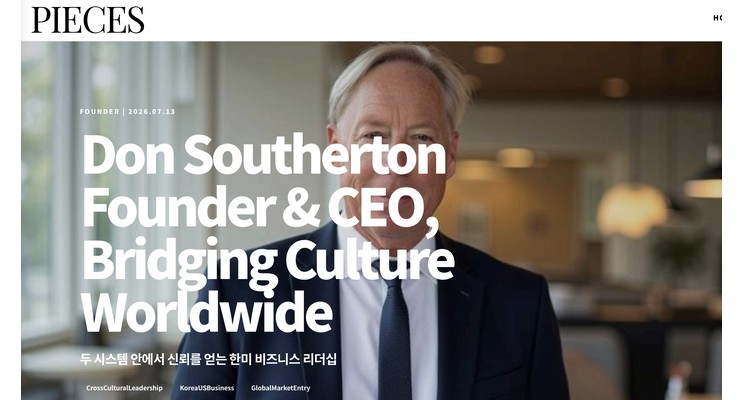
Through-line: global expansion doesn’t succeed by rigidly holding to headquarters’ playbook, but by how fast and accurately a company adapts to local realities.
“The companies that struggle are usually the ones trying to run the local operation on headquarters’ timing and assumptions rather than adapting to how business actually gets done on the ground.”
Three takeaways:
Full interview: coreaxislab.com
I have a request buymeacoffee.com/imebfsghcn
July 16, 2026
Top Story
Commerce Secretary Howard Lutnick renewed pressure on Samsung and SK Hynix to build memory chip plants in the US, speaking at a concrete-pouring ceremony for Micron’s new fab in Clay, New York. He confirmed talks are already underway with both Korean chipmakers, and noted Micron’s CEO may not welcome the added competition.
The push follows Samsung and SK Hynix’s June 29 announcement of a combined 800 trillion won buildout in Korea’s Honam region. Neither company has committed to new US fabs beyond existing plans.
Trade & Tariff
Section 122’s 10% global tariff expires July 24 (capped by statute at 15%, 150 days max).
BCW Legal Watch
The Court of International Trade ruled the IEEPA tariffs unlawful in May 2026.
The USTR has proposed a 12.5% Section 301 tariff on 46 countries, including Korea, but it is not yet finalized. We will continue to monitor.

PIECES Magazine (CoreAxis Lab) just published a Q&A with Don on cross-cultural, cross-border leadership. The through-line: global expansion doesn’t succeed on how rigidly a company holds its headquarters’ playbook, but on how fast and accurately it adapts to local realities.
“The companies that struggle are usually the ones trying to run the local operation on headquarters’ timing and assumptions rather than adapting to how business actually gets done on the ground.”
Three takeaways:
Read the full interview: coreaxislab.com
Question? Call 310-866-3777
Wednesday, July 15, 2026
TOP STORY
USTR’s proposed Section 301 forced-labor tariffs (10-12.5%) on 60 economies, including Korea, are testing the bilateral trade deal. Seoul is pressing Washington to keep any new action inside the existing framework that capped reciprocal tariffs at 15% in exchange for Korea’s $350B US investment pledge.
TRADE & TARIFF
Korea’s Trade Minister Yeo Han-koo urged the US to resolve the USTR forced-labor probe, and future disputes, within the boundaries of the Korea-US deal rather than as standalone actions.
Commerce Secretary Lutnick said he wants Samsung and SK Hynix to build plants in the US, raising the stakes on how Korea’s $350B commitment gets allocated domestically vs. stateside.
SECTOR WATCH
Semiconductors: SK Hynix completed a Nasdaq ADR listing this month, one of the largest US share sales this year, riding the AI memory boom; won inflows from the conversion helped strengthen KRW this week.
Samsung denied a Bloomberg report it’s weighing its own ADR listing, saying fundraising isn’t urgent. I, too, see Samsung not needing the cash and much more diversified than SK.
HANWHA WATCH
Hanwha Philly Shipyard’s $5B infrastructure buildout (adding two docks, three quays) continues to anchor Korea’s US shipbuilding push, part of the $150B shipbuilding investment fund tied to the broader trade deal, with capacity set to scale from roughly one ship a year to up to twenty.
BCW TAKE
The USTR’s proposed Section 301 tariffs probe is a test case for how Washington treats Korea and how Samsung and Hyundai mega-investments can shape negotiations.
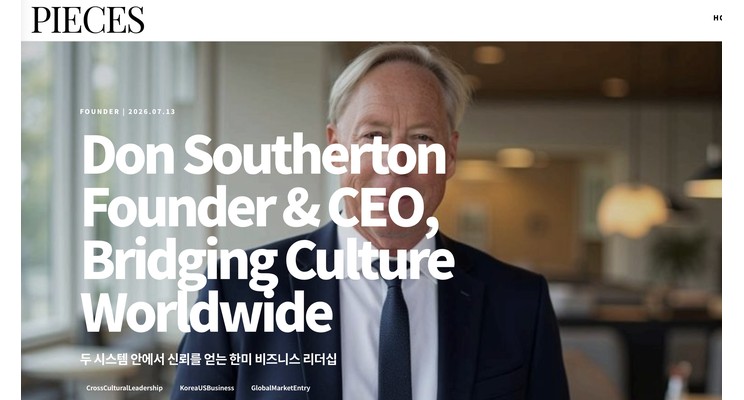
PIECES Magazine (CoreAxis Lab) just published a Q&A with Don on cross-cultural, cross-border leadership. The through-line: global expansion doesn’t succeed on how rigidly a company holds its headquarters’ playbook, but on how fast and accurately it adapts to local realities.
“The companies that struggle are usually the ones trying to run the local operation on headquarters’ timing and assumptions rather than adapting to how business actually gets done on the ground.”
Three takeaways:
Read the full interview: coreaxislab.com
Question? Call 310-866-3777